New Economy Speculative Design
How imagination becomes a tool for systems change
Much of the work on economic transformation happens at the level of policy, strategy and analysis. Necessary work, but often abstract. Even within organisations committed to systems change, the future can remain difficult to picture, let alone experience.
The New Economy Speculative Design (NESD) project started from that gap.
Within Oxfam’s New Economy work, there is a clear understanding that today’s social and ecological crises are not accidental, but the result of an economic system designed around extraction, growth and inequality. Yet translating this critique into a shared, lived vision of an alternative economy proved challenging. What does a just, caring, truly sustainable and decolonial economy actually look like in everyday life?
NESD set out to make that question tangible.
Using futures thinking and speculative design, the project created imagined artifacts and scenarios from possible post-growth futures. These were not meant to be predictions, but provocations. They were tools to help colleagues step outside dominant growth-centred mental models and reflect on the assumptions that quietly shape how we think about the economy.
Early pilot workshops revealed an important tension. When asked to design “objects from the future”, participants often reproduced familiar logics i.e. product thinking, market language, innovation framed as consumption. This was not a failure of creativity, but a sign of how deeply the growth narrative is internalised.
That insight changed the project.
Rather than pushing harder toward “better objects”, we rethought the medium itself. The futures participants described were not primarily about new products, but about new relationships: forms of care, governance, ownership, value and interdependence. To honour that, the project shifted from speculative objects to cultural probes. These are open-ended, participatory artifacts designed to be engaged with rather than just showing a futuristic object.
This methodological pivot became one of the project’s core learnings. Cultural probes allowed us to explore futures as lived experience rather than finished solutions. They created space for ambiguity, dialogue and reflection, which is exactly what is needed when the goal is narrative change rather than technical optimisation.
By the end of the design and pilot phase, NESD had developed into a repeatable methodology for moving from research and signals, to scenarios, to shared narratives that support systems change work. It also demonstrated how imagination can function as a strategic capacity within institutional contexts.
What I brought to the project
Co-developed and iterated the methodology from early research to workshop redesign
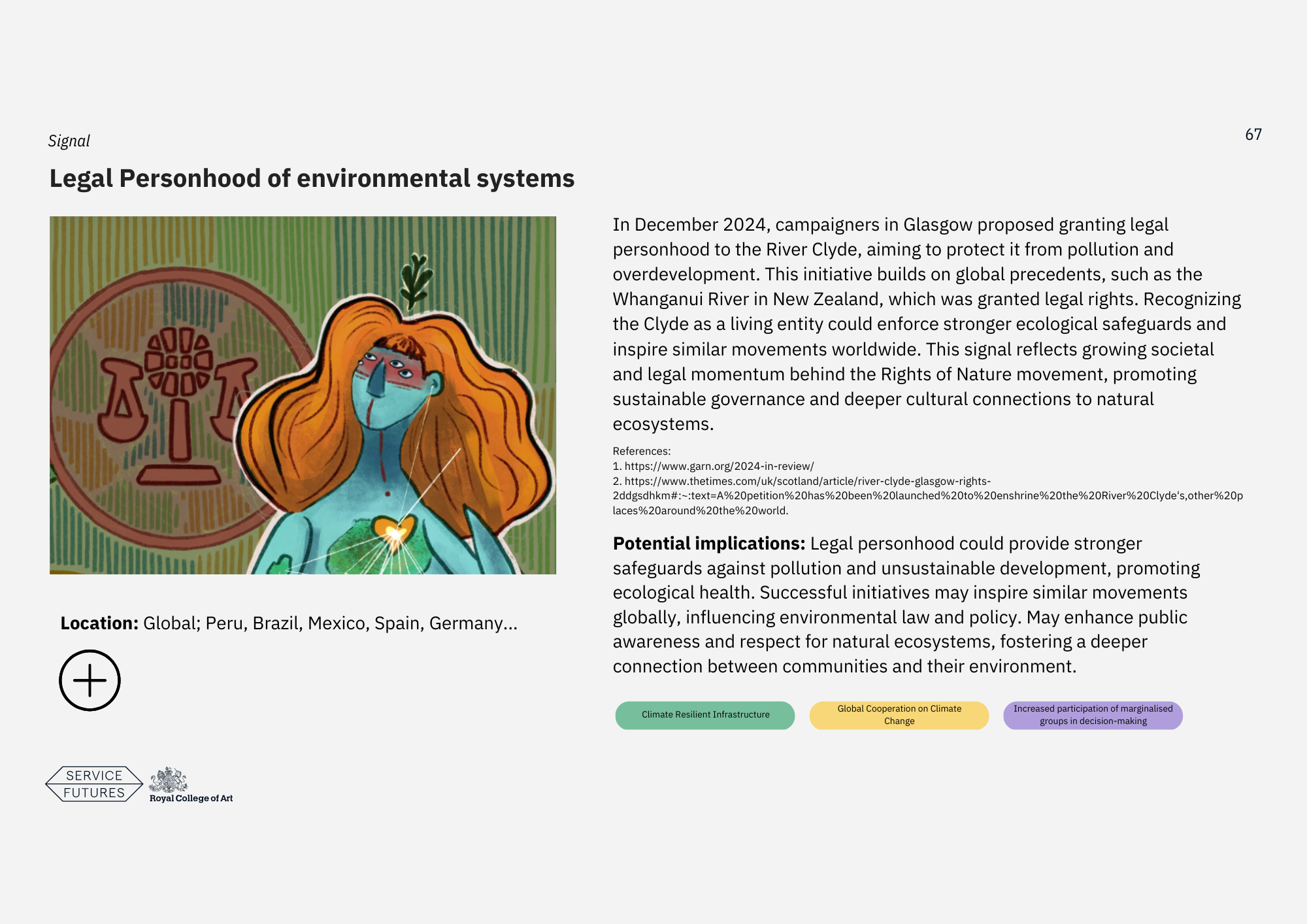
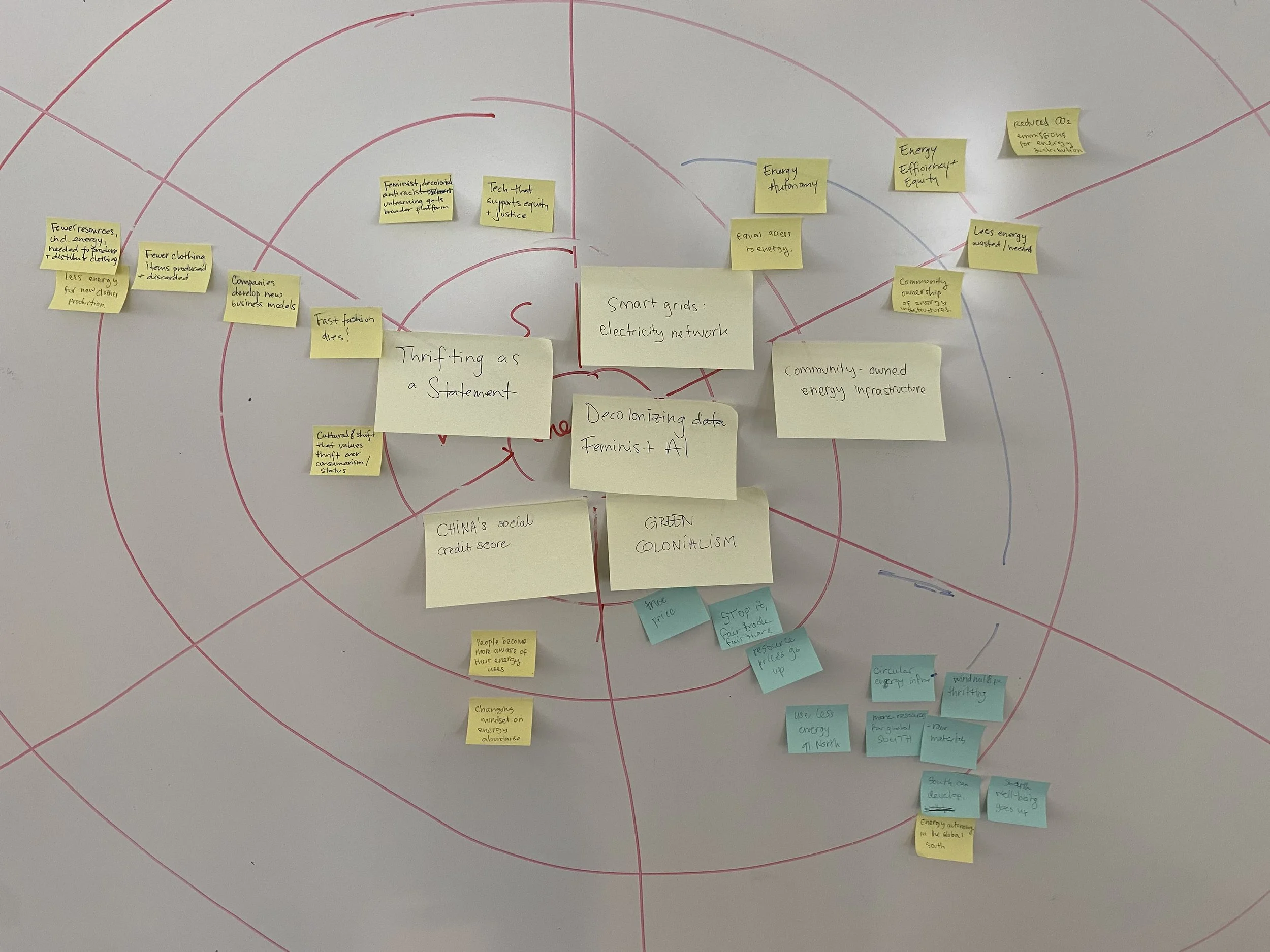
Translated trend and signal research into future scenarios colleagues could work with
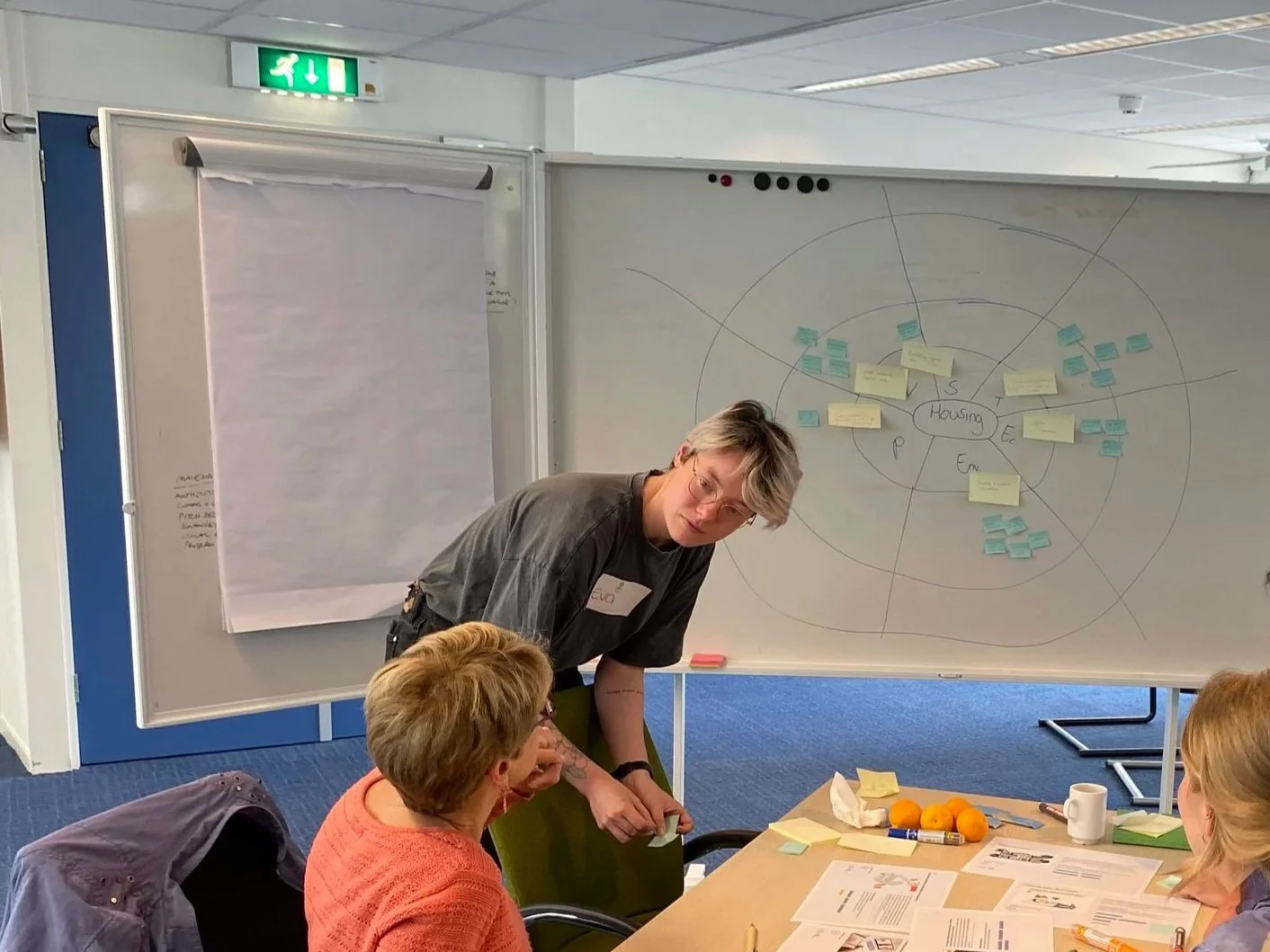
Helped redesign workshops after pilot feedback (reducing “template fatigue”)
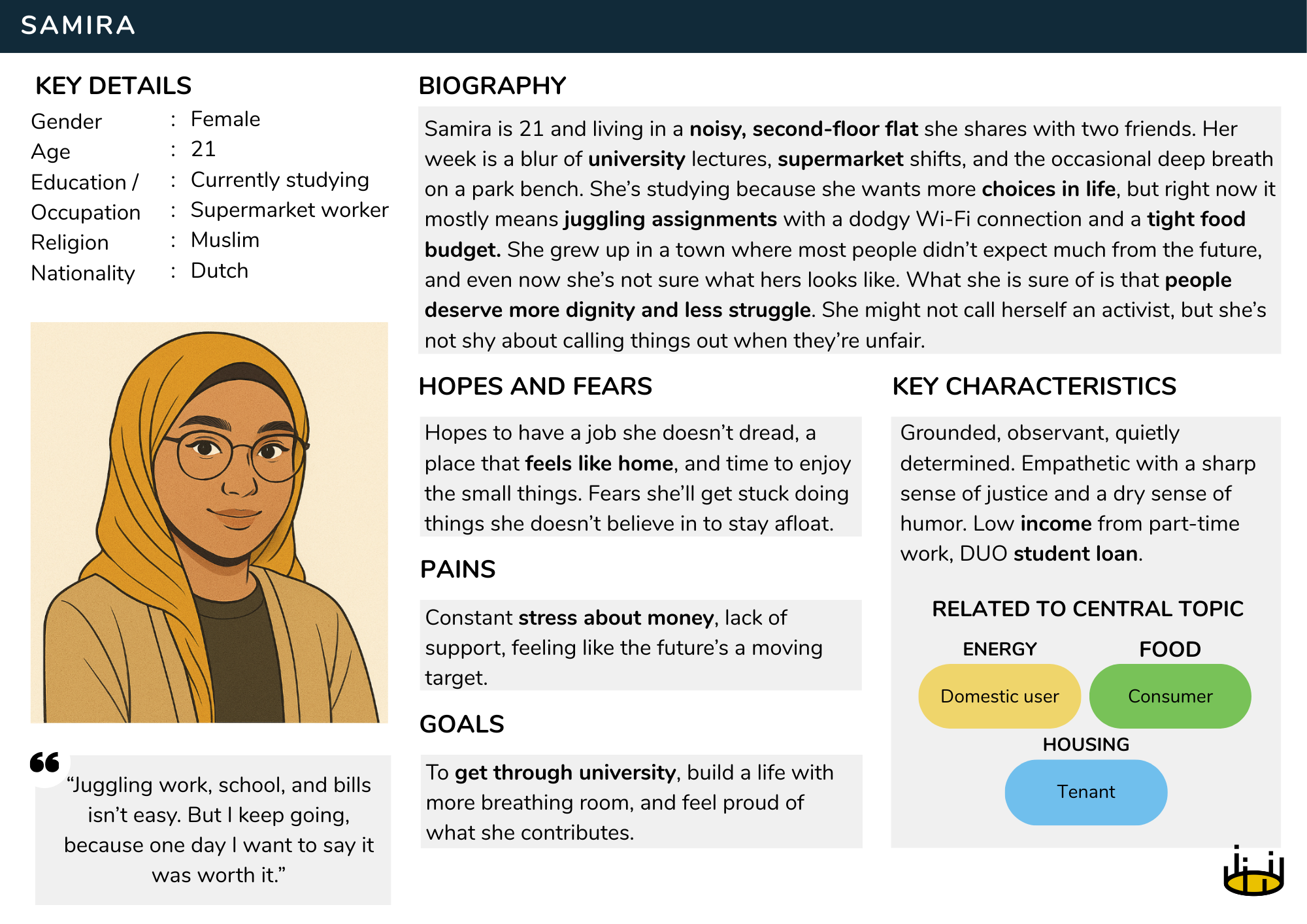
Developed probe concepts and supported preparation for exhibition-style engagement
Consultancy management and collaborative design
Skills and strengths demonstrated
Project development & coordination in an experimental, evolving context
Futures thinking & speculative design (scenarios, signals, worldbuilding)
Facilitation & workshop design (guiding groups from analysis into imagination)
Research synthesis (turning complex inputs into coherent narratives)
Narrative strategy (challenging dominant stories and opening space for alternatives)
All materials below are owned by Oxfam Novib